
Born a Sin: Monique Finds a Brother
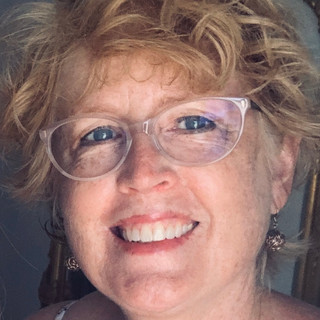

The third goal of the Peace Corps is about bringing home what you learned—carrying the culture and customs of a foreign land and sharing them with Americans to increase their understanding of the country where you served.
That commitment is at the heart of my memoir, which grew out of my two years teaching in the Democratic Republic of the Congo, and the three subsequent trips back to the people who gave me my voice and the lifelong mission of telling stories.
But not all stories are tied up in bows. The people of Kamponde believe they brought me my daughter through a fertility ceremony during my first trip back in 1996—as she was born one year later. On my third trip back to the village in 2019, I was unable to keep my promise of taking Caitlin with me so they could bless the young woman whose life, they believe, took root in their soil. A violent uprising in the region made it too dangerous.
That emotional mother-daughter homecoming was to be the final chapter of my book.
Instead, that last chapter will tell the story of Monique Duchene, an elderly woman in England who stumbled upon me through Google searches to learn more about her birth village of Kamponde—the very one in which I served.
Monique was a little girl when she was abducted by the Belgians during the violent transition from their colonial rule to independence. She was taken to series of orphanages in Belgium, never to see her mother or country again. I wrote a story about her lifelong search for family, published by New Lines Magazine.

Monique had contacted me out of the blue and we became fast friends over email—and then in person when I visited her in the English seaside town of Eastbourne—as we worked together to tell her story and find her family. Monique had received a dossier from the Belgian Archives two years earlier and learned her birth father, a French entrepreneur who ran a store and hotel in my Peace Corps village, was also a teacher at the school where I taught. When I visited Monique in August 2022, we spent hours poring over the archives. I realized that I had often walked past the bones of the Texaco gas station her father had established, past the graveyard where he likely rests today. An uncle who may have been instrumental in sending her away was the same Catholic deacon who often gave the Sunday masses I attended to enjoy the community and hymns.
You can read about our improbable friendship in the New Lines magazine story.

Family Lost and Found
That was two years ago. There have since been updates, some wonderful and some heartbreaking—as it typical of all things Congo. The dossier from the Belgian Archives included Monique’s first ever photos of her mother, siblings and herself as a little girl. She learned her mother worked for her father and became pregnant as a teenager, giving birth to a biracial baby, which at the time was against the law. Monique learned that her father had long since died and was buried in Kamponde. But the archives did not tell her whether her siblings and mother were still alive.
We got a big break about a year ago while I was doing research on this sad chapter of Belgian Congo history: When an estimated 20,000 of multiracial children were torn from their villages and flown off to Belgium, never to see their families again. I discovered a Belgian reporter for Le Soir had written a story some 10 years earlier about the atrocities, mentioning sources working to reunite these children with their families in Congo.
I sent the reporter, Colette Braeckman, an email on the off chance she still had her notebooks and contacts from her reporting. Her immediate response led us to Monique’s last living Congolese family member within three days. Through the contacts that Colette shared, Monique found a half-brother, Amié, living in Kinshasa. The contact had years earlier talked to her brother about his search for Monique and they had kept in touch. He shared Aimé’s contacts—leading Monique to chat with him on WhatsApp.
“What a week it has been so far,” Monique wrote me several days after I had connected her with Colette. “The speed of finding Aimé after all these years has been incredible but totally overwhelming. I’ve spoken with him on WhatsApp and we will continue to chat and get to know each other. There’s little doubt that he is my half-brother, as he sent photos of our mother and also a childhood photo of me that I had never seen. It’s undoubtedly me.”
She learned that seven other half siblings through her mother’s two husbands have perished. Monique also learned that her mother had never stopped looking for her.

“As you can imagine it has been very emotional for both of us and I would like to thank you for your help in finding him," Monique said. "He’s over the moon about finding me, has a family and several children, and is working in Kinshasa. He seems happy enough. Unfortunately, the rest of my other siblings have all passed away. Our mother had eight other children from two marriages, Aimé is from her second marriage. There’s only the two of us left now.
“Sadly, my mother passed away when she was around 48 or 49 from a stroke,” Monique told me. “Aimé says that the stress of everything that happened had been too much and that she never forgot me. Three months before she died, she requested that he kept trying to track me, which he did all these years.”
The two of them continue to chat via WhatsApp and wonder whether they might have the means and fortitude to meet one day. It would be an incredible conclusion to the memoir Monique is writing about her 70-year journey. But as with my own story of Kamponde, life does not always grant us the grace of a perfect ending.
When I thanked Colette, the reporter for Le Soir, for helping Monique find her brother and giving her an update, she thanked me as well. Journalists don’t often get to learn that their work one day could have this sort of real-world and emotional impact.
“Thank you for letting me know about the end of this long family story,” she wrote. “I'm delighted to have been able to give it a little boost. I sometimes criticize the internet, but it also works wonders!”


du doan xsmb mình thấy mọi người bàn tán hoài nên cũng ghé thử cho biết. Mình kiểu người lướt nhanh thôi chứ không rành soi cầu, nhưng vào trang thấy họ làm theo bài theo ngày khá dễ hiểu. Ngay phần “Soi cầu MB ngày 16 8 2026” đặt rõ ràng nên không bị nhầm đang xem ngày nào, kéo xuống là có đoạn dự đoán cho đúng 16 8 2026 luôn. Chữ không dồn một cục, chia thành mấy khối ngắn có tiêu đề nổi bật nên đọc lướt cũng bắt nhịp được. Mình cũng thích cái menu đầu mục để phía trên, bấm qua lại giữa các phần không phải tìm lâu, nhất là mấy heading theo…
Mình chơi xổ số kiểu cho vui là chính, coi kết quả như một thói quen giải trí chứ không đặt nặng chuyện đổi đời. Trước đây nghe người ta bàn về “cầu” với “dàn” mình cũng nghi ngờ lắm, nhưng lâu lâu theo dõi lại thấy có vài chỗ trùng hợp nên cũng tò mò ghi lại. Có lúc mình đọc mấy bài như https://soicauxsmb.io/nuoi-lo-bach-thu-khung-2-ngay.html rồi note nhanh vài ý, sau đó đem so với kết quả thật để tự kiểm tra xem mình có bị cuốn theo cảm giác không. Trúng được chút thì vui, nhưng sai thì cũng nhiều nên mình luôn nhắc bản thân đừng tin tuyệt đối. Nói chung dự đoán chỉ để có chuyện…